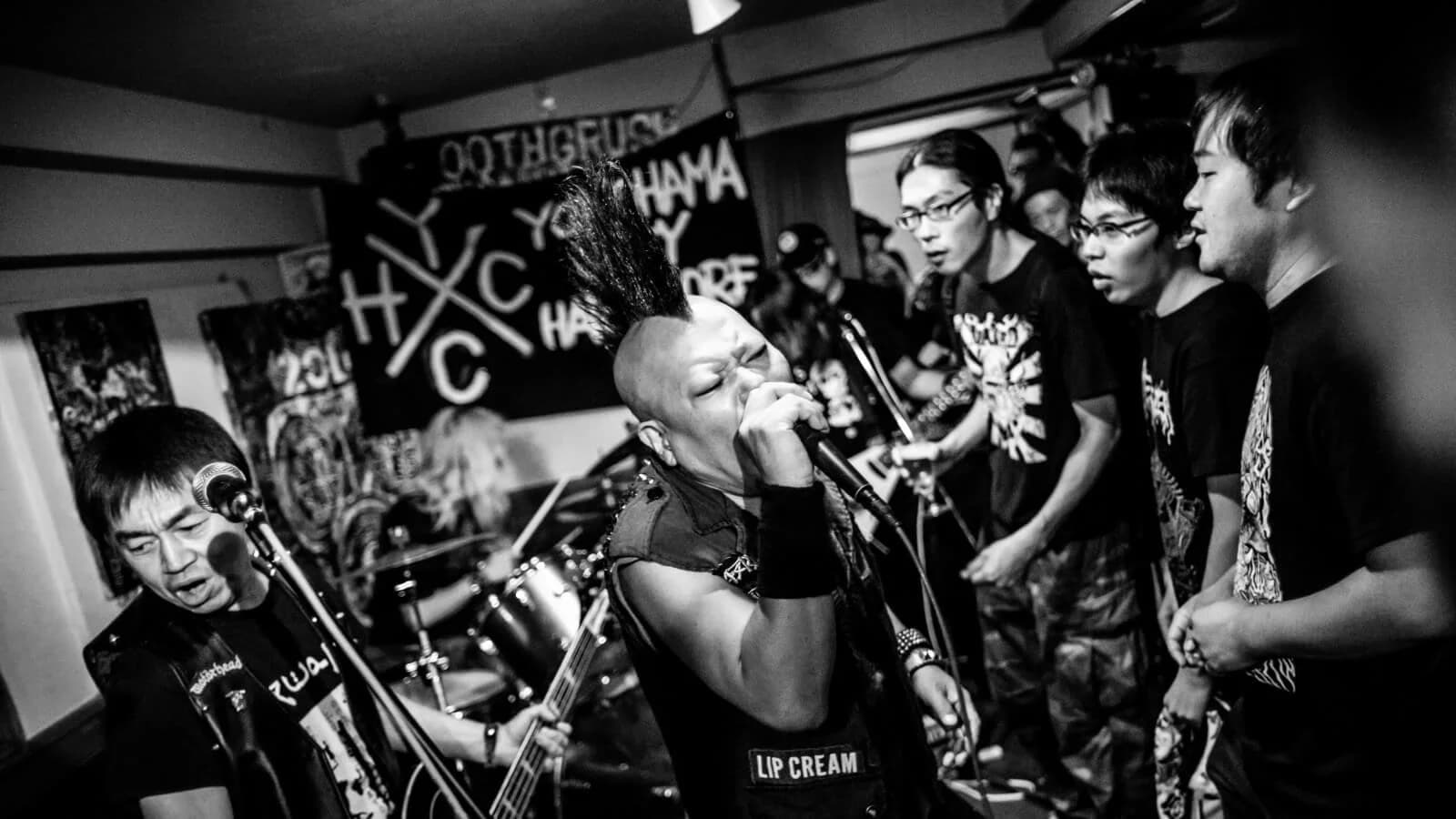
When Tokyo hardcore legends Death Side dissolved in 1995, Japan's underground lost its most influential band and the primary architects of the Burning Spirits movement. But like all great scenes, it regenerated through evolution rather than imitation. Ishiya, Death Side's legendary vocalist who helped define Japanese hardcore punk between 1987-1994, formed Forward in 1996 with bassist You and members recruited from Insane Youth and KGS. The result transcended nostalgia - it became living proof that the Burning Spirits movement contained decades more creative fire.
Forward inherited the essential DNA of Japanese hardcore's golden era while driving the sound into uncharted emotional territory. This wasn't accidental - it's what happens when one of the genre's founding fathers leads the creative charge with three decades of experience and unwavering vision. Ishiya didn't merely sing for Death Side; he helped establish what Japanese hardcore could achieve when it stopped imitating Western bands and discovered its own voice.
The band's formation during Tokyo's mid-90s cultural upheaval provided the perfect backdrop for Burning Spirits evolution. Japan's economic struggles and social uncertainty created the emotional rawness that would define Forward's approach to hardcore punk. Ishiya understood that authentic hardcore music required genuine emotional content, not just aggression and speed.
With Forward, Ishiya has spent almost three decades refining and expanding his original vision for Japanese hardcore. Each album represents another chapter in the ongoing Burning Spirits story, proving that great underground music grows more powerful with age and experience rather than becoming stale through repetition.
The Forward Burning Spirits Sound
Forward perfected Tokyo Burning Spirits hardcore through combining decades of wisdom with the uncompromising energy of true believers. Their guitar tone captures that distinctive Japanese crunch - sharp enough to slice through concrete but warm enough to convey genuine emotion. The rhythm section operates like precision machinery built for both devastating speed and intricate musical interplay, while Ishiya's vocals channel all the fury and passion that made Death Side the stuff of hardcore legend.
Their milestone 2000 album "Just Go Forward to Death" featured classic tracks including "Revolution," "What's The Meaning Of Love?," and "Set Me Free," showcasing Ishiya's boisterous vocals, catchy guitar leads, and their signature sturdy, pounding rhythm section. This release established the template for modern Burning Spirits hardcore that younger Japanese bands continue studying.
Forward's sound bridges the essential gap between the classic Burning Spirits era of the late 80s and early 90s with contemporary Japanese hardcore innovation. Listeners can detect clear echoes of Death Side's revolutionary intensity, but Forward refuses entrapment in nostalgia. They've absorbed three decades of global hardcore evolution while preserving the core spiritual elements that made Japanese punk culturally significant.
The production philosophy captures that perfect equilibrium between raw emotional energy and musical clarity - every element impacts with devastating force, but listeners can appreciate the sophisticated interplay between instruments that elevates great hardcore above mere fast noise. This attention to both power and detail reflects the Japanese approach to underground music that prioritizes both emotional authenticity and technical excellence.
Tokyo Hardcore Scene Authority
Forward occupies an unparalleled position within Tokyo's hardcore ecosystem as living embodiment of Japanese punk history who remain creatively vital rather than functioning as nostalgic museum pieces. Young hardcore bands actively seek them out for guidance and shared bills, while veteran musicians treat them with the profound respect reserved for authentic legends who earned their status through decades of consistent excellence.
Their typical shows feature carefully curated bills mixing classic Japanese hardcore pioneers with newer acts carrying the Burning Spirits torch into contemporary territory. These performances become powerful generational meetings where hardcore newcomers discovering Burning Spirits for the first time mosh alongside scene veterans who witnessed the movement's original emergence at legendary Tokyo venues like Shinjuku Antiknock.
Forward organise their own Burning Spirits shows — events where the movement's core values get transmitted to newer generations of Japanese hardcore participants.
Their measurable influence on Tokyo's current hardcore scene extends far beyond musical style - every band attempting to channel authentic emotion through high-energy Japanese hardcore owes conceptual debt to the creative path Forward helped establish and continues maintaining through active participation in the scene they helped create.
Why Forward Defines Japanese Hardcore Legacy
Forward represents essential continuity within a scene that could have easily fragmented after losing Death Side's foundational influence. Instead of permitting the Burning Spirits movement to become mere nostalgic footnote, Forward maintained its creative evolution while preserving its core spiritual elements. They proved legendary underground musicians can launch new projects that enhance rather than diminish their historical legacy.
Most crucially, Forward functions as the living bridge connecting hardcore generations. Newer fans discover the Burning Spirits classics through Forward's contemporary activities, while longtime scene veterans witness the continued evolution of music they helped establish. This represents how healthy underground scenes sustain themselves - the past informs present creativity without imprisoning artistic development.
Their documented history, from Death Side's influence through Forward's three-decade evolution, demonstrates the deep roots of Tokyo's hardcore scene that younger bands can study and build upon. The Burning Spirits movement's comprehensive impact on Japanese culture extends far beyond music into broader questions of authenticity and emotional expression in underground art.
Experience Forward Live in Tokyo
Forward shows transcend typical concert experiences, becoming celebrations of both Japanese hardcore history and present-day creative vitality. Their audiences span multiple generations - teenage hardcore newcomers moshing alongside middle-aged veterans who attended the original Death Side shows. The energy remains electric, and Ishiya continues commanding stages with the undimmed charisma that made him a hardcore legend.
These performances aren't nostalgic revival shows - they're ongoing proof that exceptional underground music transcends temporal boundaries when rooted in genuine artistic vision. Forward typically devastates Tokyo audiences 3-4 times annually at venues equipped to handle both their historical significance and their continuing physical intensity, including Antiknock and other legendary Tokyo hardcore spaces.
Check our shows calendar for upcoming Forward performances, and explore our comprehensive bands directory to discover more essential acts preserving and evolving Tokyo's hardcore legacy. Their live appearances remain mandatory experiences for anyone serious about understanding Japanese underground music's cultural importance.
Explore Forward's full profile on Music in Japan, or check the shows calendar to see when they're playing next.