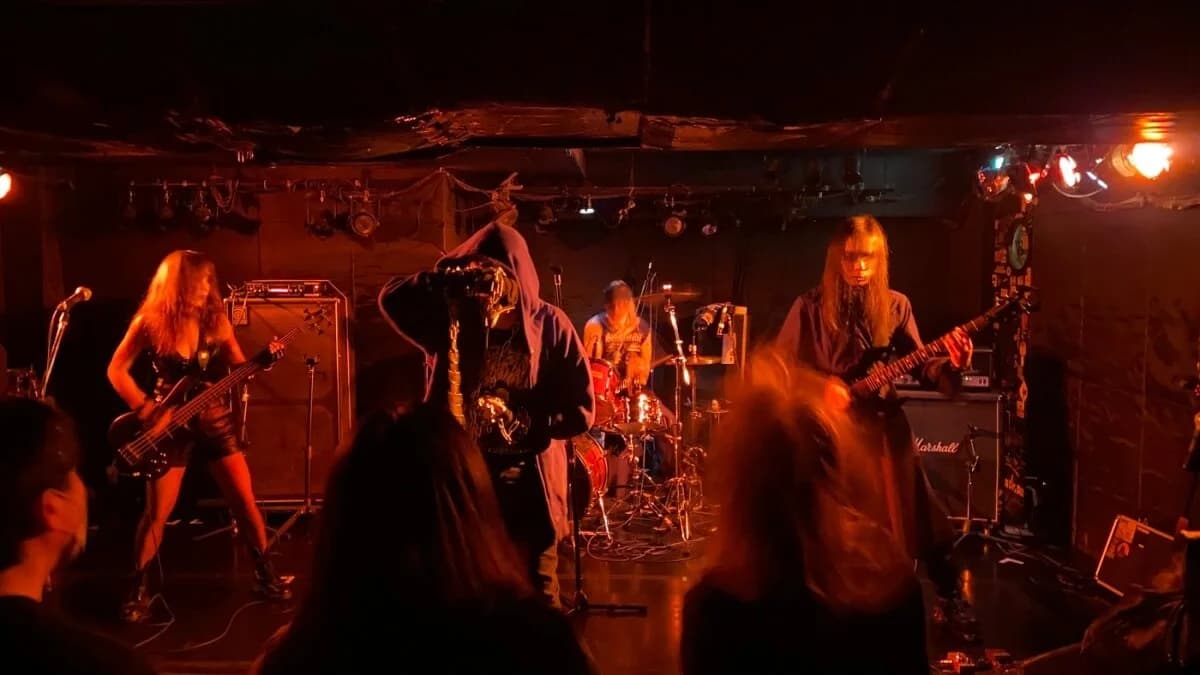
When people discuss Tokyo death doom metal, Coffins stands as the undisputed champions who conquered both Japan and the international scene. These crushing extreme metal titans emerged from Tokyo's underground in 1996, spending three decades perfecting their suffocating sound until Relapse Records recognized their undeniable power. That's not luck - that's pure persistence and brutality that few bands can match.
Bungo Uchino founded Coffins during Tokyo's mid-90s metal renaissance, when the city's extreme music scene was still defining its identity. While other Japanese bands chased Western trends, Coffins excavated the deepest vaults of doom and death, drawing inspiration from early Paradise Lost, Cathedral, and the filthiest corners of Swedish death metal pioneers like Autopsy and Asphyx. They weren't merely playing doom or death metal - they were forging something entirely new that made listeners feel trapped in a concrete tomb.
The band's formation coincided with Japan's economic recession and social upheaval of the 1990s, creating the perfect storm of frustration and darkness that would define their crushing aesthetic. Uchino recruited fellow Tokyo musicians who shared his vision of absolute sonic devastation: current lineup includes Atake on bass, Hikida on drums, and Tokita handling bone-crushing vocals.
From their earliest rehearsals in cramped Tokyo practice spaces, Coffins understood that true death doom required patience and precision. While speed-obsessed bands burned out quickly, Coffins built their reputation one glacially heavy riff at a time, developing the crushing guitar tone that would become their signature weapon.
The Coffins Death Doom Sound
Coffins perfected Tokyo death doom metal through sheer sonic brutality that makes other extreme bands sound lightweight. Their signature sound combines Autopsy's twisted crawl with Winter's crushing weight, filtered through distinctly Japanese precision and attention to devastating detail. Uchino's guitar tone possesses an otherworldly darkness - each note sounds like it was recorded in an ancient burial chamber, resonating with supernatural malevolence.
The rhythm section functions as a machinery of doom: Atake's bass creates subterranean earthquakes that shake venue foundations, while Hikida's drums hit with the force of collapsing buildings. Tokita's vocals alternate between death metal gutturals and doom-laden growls, creating a voice that seems to emerge from the earth itself. Together, they generate a suffocating wall of sound that moves like molten lead through listeners' nervous systems.
Their early releases like "Mortuary in Darkness" (2005) established the blueprint for Japanese death doom, but their evolution continued through albums like "Buried Death" (2008) and "The Fleshland" (2013). Each release demonstrated increasing mastery of the devastating slow burn technique that separates true doom from mere slow metal.
Recent Relapse Records material, including "Sinister Oath" (2024), proves Coffins continues discovering new methods of sonic soul-destruction. Their production has evolved to capture every crushing detail while maintaining the raw power that made them legends. This isn't just heavy music - it's heavy music engineered for maximum psychological impact.
Tokyo Metal Scene Dominance
Coffins occupies a unique position in Tokyo's extreme metal ecosystem, sharing stages with everyone from international touring acts to local grindcore maniacs at legendary venues like Earthdom, Shibuya O-West, and Antiknock. They're one of the rare bands that can headline a doom festival one week and devastate audiences opening for black metal touring packages the next. The respect they command from other musicians transcends genre boundaries - when Coffins appears on any bill, seasoned metalheads arrive early.
Their collaborative spirit has generated over twenty split releases with diverse acts ranging from grindcore destroyers to fellow doom crushers like Anatomia and Grudge. This isn't merely prolificacy - it's conscious community building within Tokyo's underground metal scene. Each split release strengthens connections between different extreme music communities while showcasing Coffins' ability to complement any style of heavy music.
Within Tokyo's metal hierarchy, Coffins represents the crucial bridge between the old guard pioneers and the current wave of extreme musicians. Younger death and doom bands study their approach to songwriting and production, while veteran musicians treat them as equals who earned their status through decades of consistent quality.
Their influence extends beyond Tokyo through regular appearances at Japanese metal festivals and touring packages that include stops in Osaka, Nagoya, and other regional metal strongholds. When international extreme metal acts visit Japan, promoters often pair them with Coffins, knowing their crushing performance will satisfy any extreme music audience.
Why Coffins Matter to Japanese Metal
Coffins shattered the barrier between Japanese extreme metal and international recognition, proving that Tokyo bands could create music that transcended cultural curiosity. When Relapse Records signed them, it represented genuine artistic recognition rather than tokenism - acknowledgment that these death doom masters could stand toe-to-toe with any extreme metal band worldwide. Their success opened doors for other Japanese extreme acts and demonstrated that quality music speaks a universal language.
Their influence on younger Japanese doom and death bands cannot be overstated. Groups like Nepenthes and Anatomia directly trace their inspiration to Coffins' pioneering approach to crushing heaviness. More importantly, they proved that persistence and artistic integrity eventually triumph over flash-in-the-pan trends.
In Tokyo's notoriously demanding metal scene, where bands often burn out within a few years, Coffins maintained unwavering commitment to their vision. Album after album, split after split, they constructed their reputation one devastating riff at a time. Their longevity demonstrates that true artistic vision requires decades, not months, to fully realize.
Today, when international metal fans discuss essential Japanese extreme music, Coffins stands alongside legendary acts like Sigh and Abigail as mandatory listening. They've become cultural ambassadors for Tokyo's underground metal scene, representing the city's unique approach to extreme music on global stages.
Their discography serves as a masterclass in death doom evolution, documented comprehensively on Metal Archives, where fans can trace their development from underground Tokyo band to international extreme metal icons.
Experience Coffins Live in Tokyo
Coffins typically devastates Tokyo audiences 3-4 times per year at carefully selected mid-sized venues where their crushing sound can properly demolish everyone's ribcage without losing sonic clarity. Prime locations include Shibuya O-West, Earthdom, and Club Heavy Sick Zero - spaces engineered to handle their massive low-end without sacrificing the crushing detail that makes their live performances transcendent.
Check our shows calendar to catch their next Tokyo appearance - when Coffins announces a hometown gig, tickets disappear rapidly among knowledgeable extreme metal fans. Their live performances remind audiences why they initially fell in love with heavy music, delivering the kind of crushing intensity that only comes from decades of perfecting their craft.
Recent releases remain available through their official Bandcamp where fans can experience their recorded evolution, while YouTube performances capture glimpses of their devastating stage presence.
For comprehensive tour dates and discovering more bands destroying Tokyo's underground metal scene, explore our complete bands directory. Coffins continues setting the standard for Japanese death doom excellence that younger bands aspire to match.
Explore Coffins's full profile on Music in Japan, or check the shows calendar to see when they're playing next.